

Design Council evidence
£136.7BN
UK design economy GVA in 2023
2.27M
people employed in the design economy in 2025
222,440
digital-design roles added between 2020 and 2025
Source: Design Council, Design Economy 2026. Figures use the latest ONS releases available for each measure.
AI can make almost anything. So what becomes valuable?
The world has gone wild with AI.
It can write the copy, generate the image and build the first version of a product.
So what becomes valuable when almost anyone can make almost anything?
The idea. The judgement. The experience. The courage to imagine something better.
That is why AI cannot be reduced to an efficiency programme.
The organisations that win will not simply produce the same work faster. They will use AI to rethink the work itself: how customers are served, how decisions are made, how employees contribute and where distinctly human value belongs.
Creativity is growth infrastructure
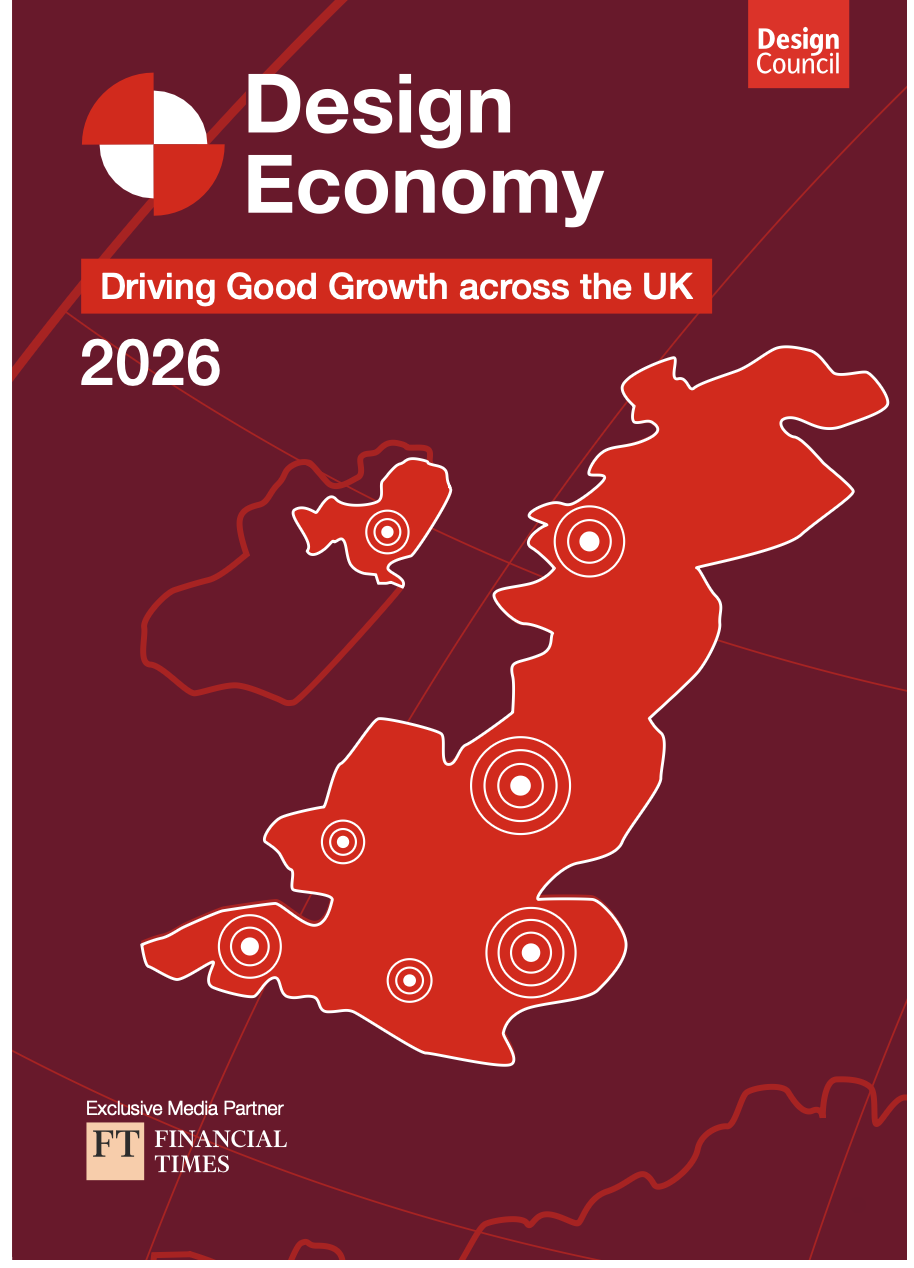
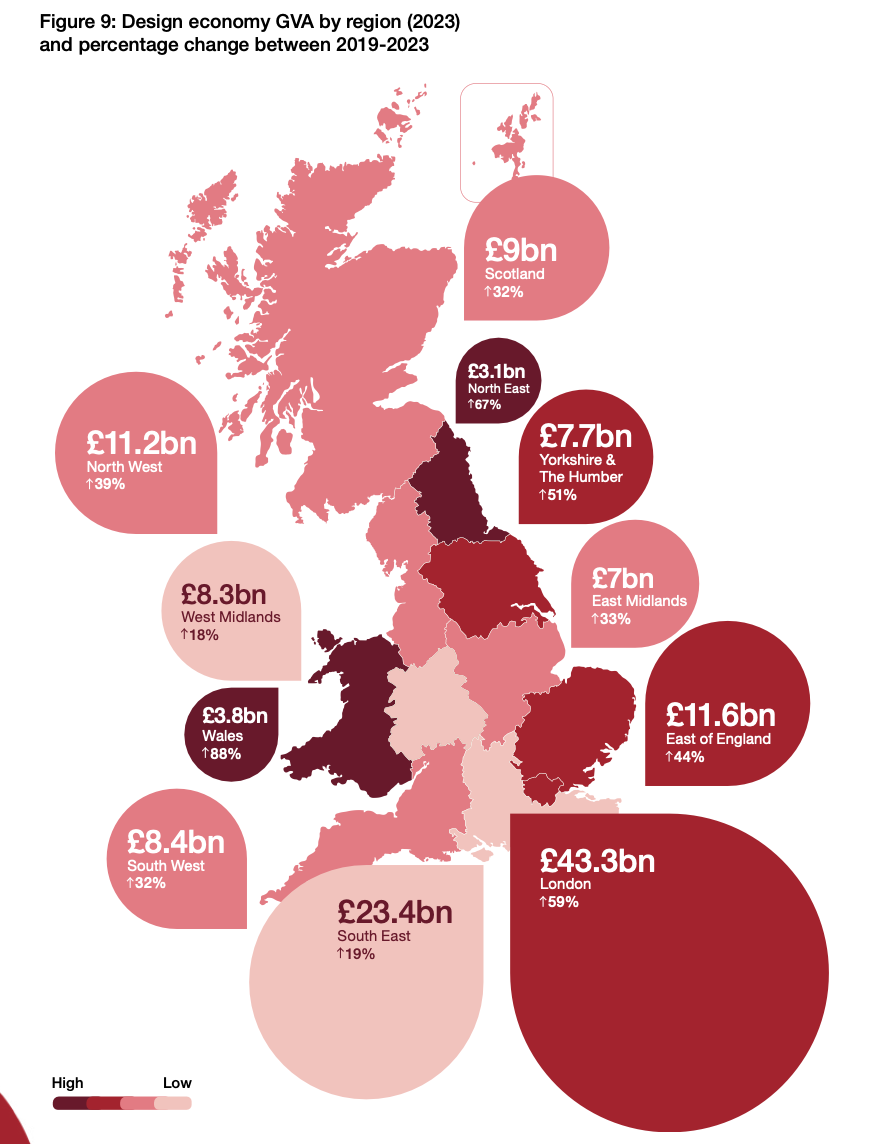
The Design Council’s Design Economy 2026 report puts an economic value on creativity.
The UK design economy generated £136.7 billion in 2023 and supported more than 2.27 million jobs in 2025. Digital design added more than 222,000 roles between 2020 and 2025.
Design is not confined to agencies and creative businesses. Designers are working across finance, healthcare, manufacturing, technology, retail and public services.
Creativity is not decoration added at the end. It is part of how organisations solve problems, adopt technology and create growth.
AI is not making that less important.
Related research shared by the Design Council found that 91% of designers already use AI weekly, yet 80% still prefer human judgement.
The emerging model combines machine speed with human imagination.
The job changes before the title does
This was one of the strongest themes in my recent AI session with business leaders at Dundee & Angus Chamber of Commerce.
AI changes the work before it changes the organisational chart.
A marketer may still be called a marketer, but spend less time producing first drafts and more time shaping ideas, questioning evidence and directing automated channels.
A service designer may build and test a working journey in hours rather than documenting it for weeks.
A leader may have access to far more analysis, but carry greater responsibility for knowing when not to trust it.
That creates a paradox:
If early-career tasks disappear, how will people develop the experience needed to challenge the machine later?
If everyone uses the same models, how do organisations avoid arriving at the same safe, average answer?
If outputs become effortless, who remains accountable for whether the outcome is useful, fair or true?
Critical thinking, curiosity, empathy and creative direction are not extras around an AI strategy.
They are part of its operating model.
From customer experience to AX
We have spent decades designing customer experience and employee experience.
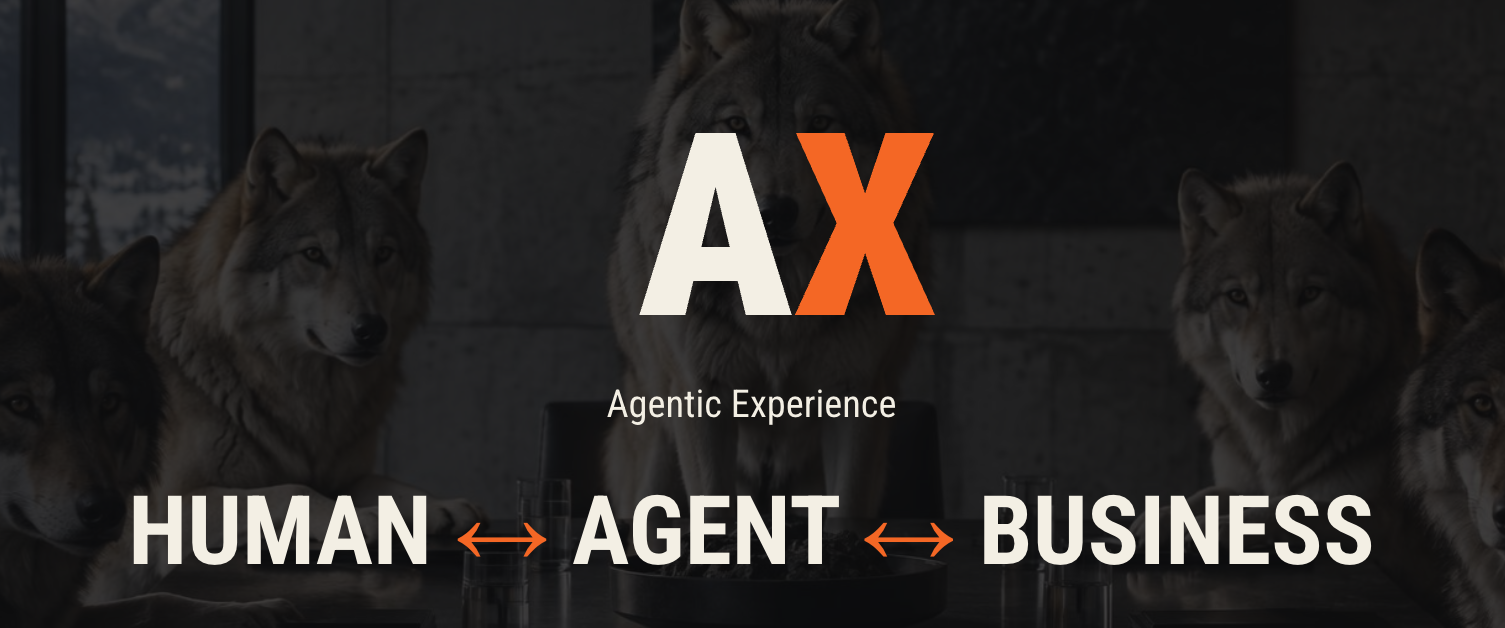
Now organisations must design AX: the human-and-agent experience.
That means deciding:
- Where can an agent remove friction or repetitive effort?
- Where must human judgement remain visible and accountable?
- Where does a customer want speed?
- Where do they need empathy, reassurance or trust?
- How can people challenge, correct or stop an automated decision?
The answer is not “AI everywhere.”
It is an intentionally designed relationship between people, technology and outcomes.
Creativity allows us to reframe the problem, connect ideas that previously sat apart and imagine a better way for people and machines to work together.
Stop debating the future. Build something people can react to.
One of the biggest barriers to transformation is that language allows everyone to imagine a different future while believing they agree.
“AI-enabled.”
“Personalised.”
“Agentic.”
“Seamless.”
These words sound impressive, but they are not a shared design.
From imagination to something you can test
EMM Studio is a Lovable Solution Partner.
We use live visual prototyping to turn abstract transformation ideas into working experiences that leaders, employees and customers can see, test and challenge.
Instead of spending months debating a theoretical requirement, teams can explore an interactive version of a new service, workflow or digital product early.
- Is this the right problem?
- Does this improve the experience?
- What should the machine do?
- Where must a human remain involved?
- What data, governance and skills would make it viable?
- Should we stop, adapt, adopt or scale it?
The prototype is not the strategy.It improves the strategy through evidence.
Explore live prototypingVibe coding: the shortest path from idea to evidence
There is a name for what happens when someone describes what they want in plain language and watches working software appear: vibe coding.
Prompt an idea into existence. See it. React to it. Change it.
The term sounds casual. The shift behind it is not. For the first time, the people who understand the problem—not just the people who write code—can build the first version of a solution.
That changes who gets to innovate. A service manager, a clinician, a front-line operations lead can shape a working tool instead of filing a request that dies in a backlog.
It also removes the oldest excuse in transformation: “we cannot know until it is built.” Now you can know—before committing budget, teams or reputations.
Vibe coding is not a licence to skip judgement. Untested code, unclear ownership and improvised data handling can create real risk. The discipline still matters; what changes is how quickly you reach the moment where judgement is worth applying.
Growth accelerates when the gap between idea and evidence disappears
The Design Council titled its report Driving Good Growth for a reason. Growth does not come from producing the same output faster. It comes from solving better problems, sooner.
When the cost of testing an idea collapses, organisations can explore more options, kill the weak ones early and scale only the ones that have earned it.
Traditional transformation runs on business cases, requirements documents and procurement cycles that stretch across quarters. By the time an idea is approved, the market has moved.
Organisations that can move from imagination to a testable experience in days compound that advantage relentlessly. Each cycle produces evidence, and each piece of evidence sharpens the next move.
That is growth acceleration: not more AI, but a shorter distance between imagination and proof.
Creativity without readiness becomes theatre
The ability to build something quickly does not mean an organisation is ready to adopt it.
A compelling prototype can still fail when ownership is unclear, data is unreliable, governance arrives too late or employees do not trust the change.
That is why EMM Studio connects creative exploration to AI readiness.
We examine the conditions surrounding an idea—strategy, leadership, operating model, data, technology, governance, people and customer experience—before helping an organisation move from possibility to implementation.

01
Reimagine
Rethink the work instead of automating the current process.
02
Make
Turn the idea into a working MVP.
03
Test
Validate the experience and assumptions with real people.

04
Ready
Build the conditions required to deliver, govern and adopt it.

05
Move
Stop, adapt, adopt or scale based on evidence.
The real risk is powerful technology with no imagination
Access to AI will not be the lasting differentiator. The same tools will be available to competitors.
The difference will be what an organisation can imagine, how well it understands people, how quickly it can turn an idea into evidence and whether it has the judgement to make the right move.
AI does not make creativity obsolete.
It raises its value.
Because when making becomes easier, knowing what is worth making becomes everything.
What’s the next move?
EMM Studio helps leadership teams assess AI readiness, reimagine services and operating models, and turn priority ideas into working MVPs.
Every move matters. →
Questions
Why is creativity important in AI transformation?
AI can accelerate production and automation, but organisations still need human creativity to identify worthwhile problems, imagine better services and apply judgement to AI-generated outputs.
What is live visual prototyping?
Live visual prototyping turns an idea for a service, workflow or digital product into an interactive experience that stakeholders can test before full implementation.
What is AX?
AX is the human-and-agent experience: the intentional design of how customers, employees and AI agents interact, including where automation is appropriate and where human judgement must remain.
What is vibe coding?
Vibe coding is building software by describing what you want in plain language and letting AI generate a working version, which you then review, refine and test. It lets the people closest to a problem shape a working solution without waiting months for a development cycle.
How does AI accelerate growth?
AI accelerates growth by collapsing the distance between an idea and real-world evidence. When teams can prototype, test and refine in days rather than months, they explore more options, stop weak ideas early and invest only in what demonstrably works.