

The future of artificial intelligence is not being written solely in Silicon Valley. Nor is it being decided in the boardrooms of London, New York or San Francisco.
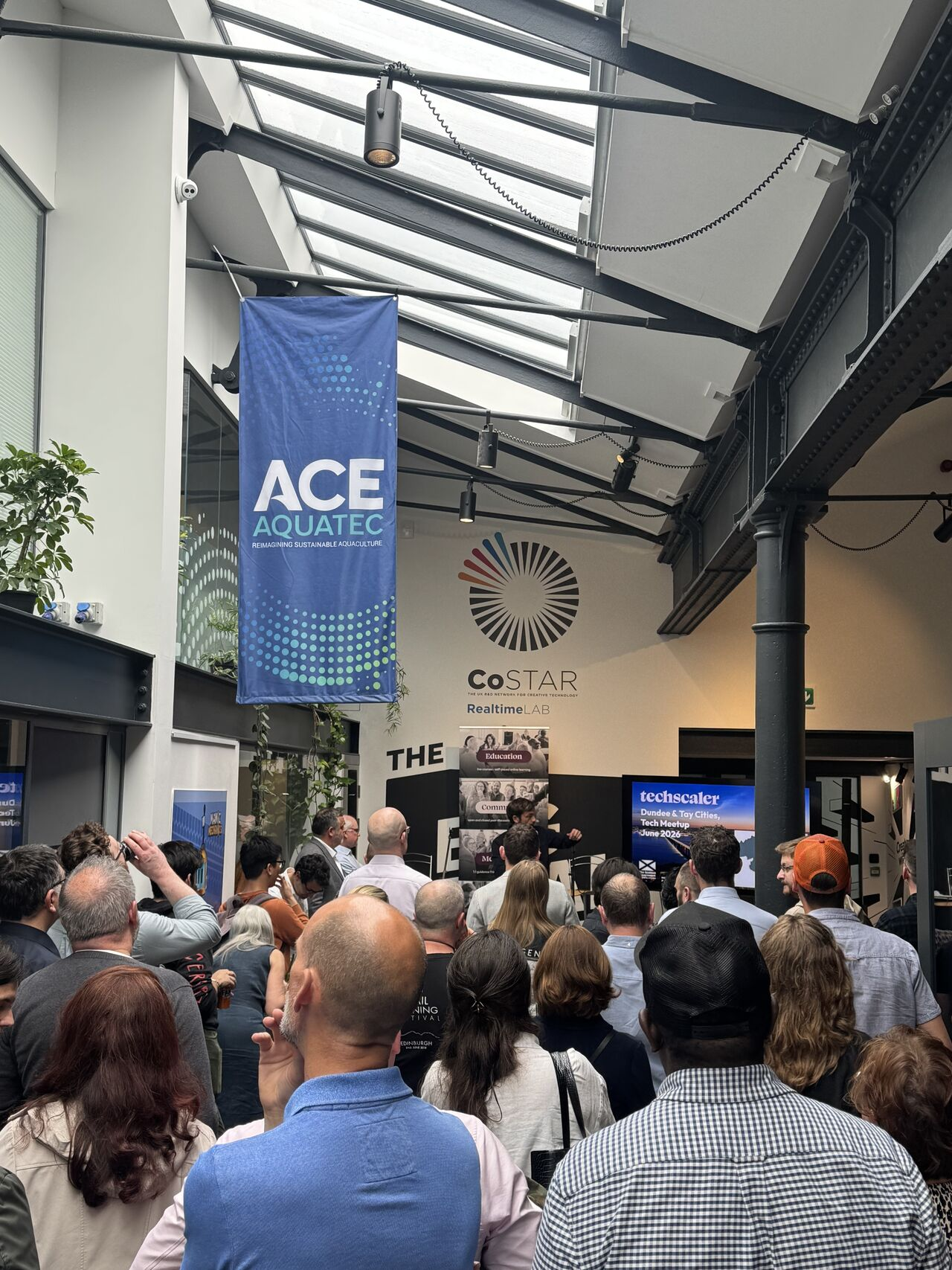
On a rainy evening overlooking Dundee’s waterfront, a different story was being told.
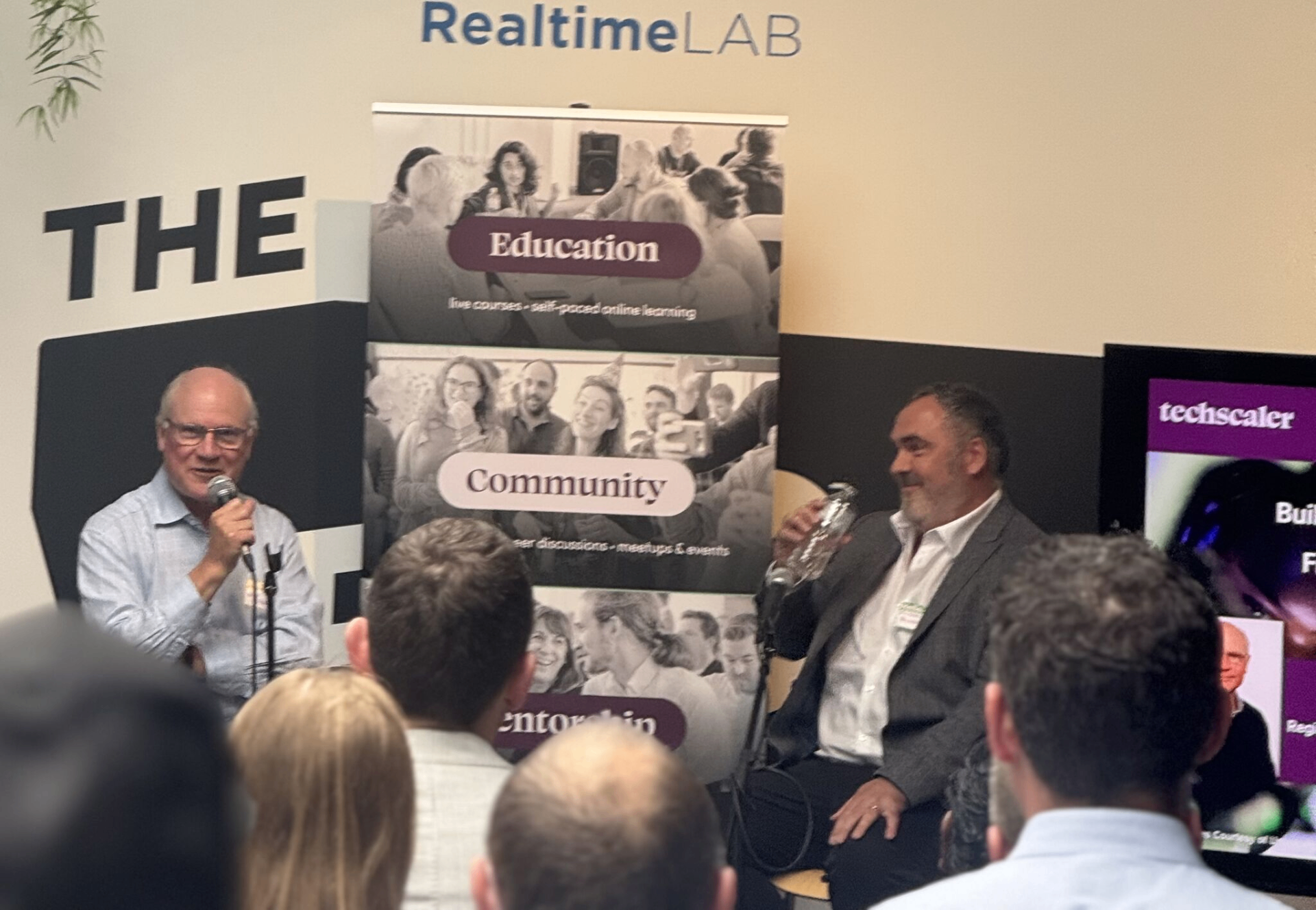
At Water’s Edge, founders, investors, academics and business leaders gathered to hear Dr Richard Bickerton reflect on the journey of Exscientia, the AI-driven drug discovery company that grew from a University of Dundee spinout into a global business, listed on NASDAQ and ultimately acquired by Recursion.
On the surface, it was a story about artificial intelligence.
In reality, it was a story about something far more important.
Capability.
Technology Alone Was Never the Defining Factor
Over the last two years, artificial intelligence has become the dominant conversation in business. Organisations are racing to implement new tools, boards are demanding AI strategies and investors are searching for the next breakthrough.
Yet listening to Bickerton describe the evolution of Exscientia, it became clear that technology alone was never the defining factor. The company’s success was not built on access to a model that others lacked. It was built on its ability to learn faster. To test ideas more rapidly. To turn insight into action more effectively.
Artificial intelligence accelerated that process, but it did not replace it.
Access Is No Longer the Advantage
This distinction is becoming increasingly important. As AI capabilities become more widely available, the technology itself is becoming less differentiated. What was once scarce is rapidly becoming accessible. The competitive advantage created by access alone is shrinking.
The question facing leaders is no longer whether they have access to artificial intelligence. Most do. The more important question is whether their organisations can adapt quickly enough to benefit from it.
History Rewards Reorganisation, Not Acquisition
History suggests that major technological shifts rarely reward those who simply acquire new tools. They reward those who reorganise themselves around new possibilities.
Electricity did not transform manufacturing because factories had better power supplies. It transformed manufacturing because organisations redesigned the way work was done.
The internet did not create value because companies built websites. It created value because businesses reimagined customer relationships, supply chains and entire operating models.
Artificial intelligence appears to be following the same path.
The New Geography of Innovation
Which is perhaps why Dundee’s story feels so relevant.
For decades, innovation has been associated with a handful of globally recognised locations. Silicon Valley became shorthand for entrepreneurship. Boston became synonymous with biotechnology. London positioned itself as a financial and technology hub.
Dundee rarely appeared on those lists.
Yet it has quietly produced some of the most significant technology success stories in the United Kingdom. From gaming and digital entertainment to life sciences and software, the city has repeatedly demonstrated that innovation is not solely a function of geography.
It is a function of environment.
Density as the Real Competitive Advantage
This is where initiatives such as Techscaler, CodeBase and Water’s Edge play an important role. Their value extends beyond providing workspace or startup support.
Techscaler Dundee & Tayside · CodeBase · Water’s Edge
They create density.
Density of talent. Density of experience. Density of ambition.
When founders, researchers, investors and operators occupy the same ecosystem, knowledge moves faster. Ideas are challenged earlier. Opportunities emerge more frequently. Learning compounds.
Chris van der Kuyl has long argued that Scotland should be more confident about its ability to build globally relevant businesses. Looking around the room that evening, it was difficult to disagree.
The Real Lesson from Dundee
The lesson from Dundee is not that every company will become the next Exscientia. Nor is it that artificial intelligence will solve every business problem.
The lesson is simpler.
The organisations and ecosystems that thrive in the coming decade will be those capable of learning faster than change happens around them.
Technology will continue to evolve. Markets will continue to shift. Business models will continue to be disrupted.
The winners will not necessarily be those with the most advanced tools.
They will be those with the greatest capacity to adapt.
And increasingly, that capacity may matter more than where they happen to be located.
Innovation Belongs to the Many
The future of innovation is unlikely to belong to a single city, a single technology or a single industry. It will belong to the places, organisations and leaders that create environments where learning never stops.
On the evidence of a small gathering on Dundee’s waterfront, that future may be more widely distributed than many people imagine.
About the Event
The discussion that inspired this article took place at Water’s Edge in Dundee as part of the Techscaler Dundee & Tay Cities programme.
Delivered by CodeBase on behalf of the Scottish Government, Techscaler was created to help Scotland’s technology businesses start, grow and scale. More than an accelerator or workspace programme, it is designed to connect founders with experienced operators, investors, mentors and peers who can help transform promising ideas into sustainable, globally relevant businesses.
That mission reflects a broader challenge facing Scotland. The country has never lacked innovation, talent or entrepreneurial ambition. The greater challenge has often been helping successful young companies scale beyond their local markets and compete internationally. Techscaler, alongside organisations such as CodeBase, exists to help bridge that gap.
The event was hosted at Water’s Edge, the Dundee innovation hub founded by Chris van der Kuyl and Paddy Burns. Situated on Dundee’s waterfront, Water’s Edge has become a focal point for technology, gaming, digital and creative businesses. More importantly, it represents a belief that world-class companies can be built from Scotland and that geography should not limit ambition.
The evening featured Dr Richard Bickerton, co-founder of Exscientia, whose journey from University of Dundee spinout to global AI-driven drug discovery company provided the backdrop for a wider conversation about innovation, growth and organisational learning. While Exscientia’s achievements in artificial intelligence are remarkable, the discussion explored something deeper: how experimentation, data, learning and execution combine to create lasting competitive advantage.
The conversation was expertly chaired by Sir Mike Ferguson, one of Scotland’s most respected life sciences academics, whose own contribution to research and innovation has helped establish Dundee as a globally recognised centre for scientific excellence.
Special recognition should also go to Brian McNicoll and the wider Techscaler and CodeBase teams. While founders and success stories often receive the headlines, thriving innovation ecosystems depend on people who create connections, bring communities together and help ideas move more quickly between academia, startups, investors and industry. Those seemingly small acts of convening often become the foundation upon which future success is built.
Taken together, the organisations, individuals and ideas represented that evening offered a powerful reminder that innovation is rarely the result of a single technology or breakthrough. More often, it emerges from communities that create the conditions for talent, ambition and learning to compound over time.
Emily Walters is Founder of EMM Studio, helping organisations bridge the gap between strategy, technology and execution during periods of growth, transformation and AI adoption.